Кто встречался с Zhang Yimou?
Gong Li встречался с Zhang Yimou с ? года по ?. года Разница в возрасте составила 14 года, 1 месяцев и 17 дня.
Zhang Yimou

Zhang Yimou (simplified Chinese: 张艺谋; traditional Chinese: 張藝謀; pinyin: Zhāng Yìmóu; born 14 November 1950) is a Chinese filmmaker. He made his directorial debut with Red Sorghum (1987), which won the Golden Bear at the Berlin International Film Festival. Since then, he has established himself as a leading figure of China's Fifth Generation directors and one of the most commercially and critically successful directors in the world. Zhang directed the opening and closing ceremonies of the 2008 Beijing Summer Olympic Games as well as the opening and closing ceremonies of the 2022 Beijing Winter Olympic Games, which received considerable international acclaim.
One of Zhang’s early recurring themes is the resilience of ordinary people, as in To Live (1994) and Not One Less (1999). Beginning with Hero (2002), which ushered the Chinese film industry into the era of commercial blockbusters, his work increasingly reflected an interest in grand narratives and critical engagement with politics and history, as in Curse of the Golden Flower (2006), One Second (2020) and Under the Light (2023), which occasionally fell foul of Chinese censors. His films are also noted for their rich use of colour, as in Raise the Red Lantern (1991) and House of Flying Daggers (2004), and for their portrayals of women that launched actresses such as Gong Li, Zhang Ziyi and Ni Ni—collectively known as “Mou Girls”—to stardom. His highest-budgeted film to date is the all-star The Great Wall (2016), which became his greatest bomb. His highest-grossing film to date is Full River Red (2023), which became the seventh highest-grossing film of all time in China. Zhang was awarded an honorary doctorate from Yale University in 2010 and from Boston University in 2018. In 2022, he joined the Beijing Film Academy as a distinguished professor.
подробнее...Gong Li
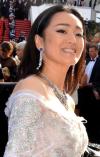
Gong Li (chinois traditionnel : 巩俐, Gǒng Lì), née le à Shenyang, dans la province du Liaoning, en Chine, est une actrice sino-singapourienne.
Elle est considérée comme l’une des plus grandes actrices en Chine et même en Asie aujourd’hui. Au cours de sa carrière, elle a notamment été distinguée par une coupe Volpi, deux coqs d'or et trois prix des Cent Fleurs, ces deux dernières étant les deux plus prestigieuses distinctions chinoises du cinéma. Elle a également remporté les prix honoraires du festival de Berlin et du festival de Cannes.
Gong a été présidente du jury de la Berlinale 2000 et de la Mostra de Venise 2002, étant ainsi la première personnalité chinoise à occuper ce poste lors des deux événements.
подробнее...