Кто встречался с Анна де Сталь?
Benjamin Constant встречался с Анна де Сталь с ? года по ?. года Разница в возрасте составила 1 года, 6 месяцев и 3 дня.
Louis, comte de Narbonne-Lara встречался с Анна де Сталь с ? года по ?. года Разница в возрасте составила 11 года, 1 месяцев и 2 дня.
Charles-Maurice de Talleyrand-Périgord встречался с Анна де Сталь с ? года по ?. года Разница в возрасте составила 12 года, 2 месяцев и 20 дня.
Анна де Сталь

Баронесса Анна-Луиза Жермена де Сталь-Гольштейн (фр. Anne-Louise Germaine de Staël-Holstein), урождённая Неккер (Necker; 1766—1817) — французская писательница, теоретик литературы, публицист; хозяйка салона, имевшая большое влияние на литературные вкусы Европы начала XIX века. Дочь министра финансов Жака Неккера, хозяйка литературного салона. Пользовалась авторитетом в политических кругах и публично оппонировала Наполеону, за что была выслана из Франции. В 1803—1814 гг. держала салон в швейцарском замке Коппе. Отстаивала равенство полов, пропагандировала романтическое направление в искусстве. Наиболее известна под сокращённым именем мадам де Сталь (фр. Madame de Staël). Её главные произведения — романы «Дельфина» и «Коринна, или Италия», очерк «О Германии».
подробнее...Benjamin Constant

Анри́-Бенжаме́н Конста́н де Ребе́к (фр. Henri-Benjamin Constant de Rebecque; 25 октября 1767 года, Лозанна, Швейцария — 8 декабря 1830 года, Париж, Франция) — французско-швейцарский философ, писатель и поэт, публицист, политический деятель времён Французской революции, бонапартизма и Реставрации.
подробнее...Анна де Сталь
Louis, comte de Narbonne-Lara
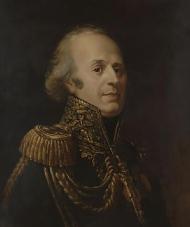
Луи-Мари-Жак-Альмарик де Нарбонн-Лара (фр. Louis-Marie-Jaques-Almaric de Narbonne-Lara) — французский дипломат и генерал эпохи Наполеоновских войн.
подробнее...Анна де Сталь
Charles-Maurice de Talleyrand-Périgord
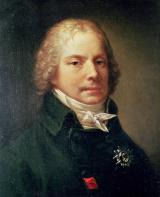
Charles-Maurice de Talleyrand-Périgord (; French: [ʃaʁl mɔʁis də tal(ɛ)ʁɑ̃ peʁiɡɔʁ, moʁ-]; 2 February 1754 – 17 May 1838), 1st Prince of Benevento, then Prince of Talleyrand, was a French secularized clergyman, statesman, and leading diplomat. After studying theology, he became Agent-General of the Clergy in 1780. In 1789, just before the French Revolution, he became Bishop of Autun. He worked at the highest levels of successive French governments, most commonly as foreign minister or in some other diplomatic capacity. He served as the French Diplomat in the Congress of Vienna. His career spanned the regimes of Louis XVI, the years of the French Revolution, Napoleon, Louis XVIII, Charles X, and Louis Philippe I. Those Talleyrand served often distrusted him but found him extremely useful. The name "Talleyrand" has become a byword for crafty and cynical diplomacy.
Talleyrand was Napoleon's chief diplomat during the years when French military victories brought one European state after another under French hegemony. Most of the time, he worked for peace so as to consolidate France's gains. He succeeded in obtaining peace with Austria through the 1801 Treaty of Lunéville and with Britain in the 1802 Treaty of Amiens. He could not prevent the renewal of war in 1803 but by 1805 he opposed his emperor's renewed wars against Austria, Prussia, and Russia. He resigned as foreign minister in August 1807, but retained the trust of Napoleon. He conspired to undermine the emperor's plans through secret dealings with Tsar Alexander I of Russia and the Austrian minister Klemens von Metternich. Talleyrand sought a negotiated secure peace so as to perpetuate the gains of the French Revolution. Napoleon rejected peace; when he fell in 1814, Talleyrand supported the Bourbon Restoration decided by the Allies. He played a major role at the Congress of Vienna in 1814–1815, where he negotiated a favorable settlement for France and played a role in unwinding the Napoleonic Wars.
Talleyrand polarizes opinion. Some regard him as one of the most versatile, skilled, and influential diplomats in European history, while others believe that he was a traitor, betraying in turn the ancien régime, the French Revolution, and Napoleon.
подробнее...