Кто встречался с Augustus II the Strong?
Erdmuta Zofia von Dieskau встречался с Augustus II the Strong с ? года по ?. года Разница в возрасте составила 27 года, 9 месяцев и 13 дня.
Аврора фон Кёнигсмарк встречался с Augustus II the Strong с ? года по ?. года Разница в возрасте составила 8 года, 0 месяцев и 14 дня.
Henriette Rénard встречался с Augustus II the Strong с ? года по ?. года
Anna Constantia von Brockdorff встречался с Augustus II the Strong с ? года по ?. года Разница в возрасте составила 10 года, 5 месяцев и 5 дня.
Ursula Katharina of Altenbockum встречался с Augustus II the Strong с ? года по ?. года Разница в возрасте составила 9 года, 11 месяцев и 22 дня.
Марианна Белинская встречался с Augustus II the Strong с ? года по ?. года
Emerencjanna Pociej встречался с Augustus II the Strong с ? года по ?. года
Maria Aurora von Spiegel встречался с Augustus II the Strong с ? года по ?. года
Henrietta von Osterhausen встречался с Augustus II the Strong с ? года по ?. года
Angélique Debargues встречался с Augustus II the Strong с ? года по ?. года
Zofia Eleonora Klengel встречался с Augustus II the Strong с ? года по ?. года
Anna Aloysia Maximiliane von Lamberg встречался с Augustus II the Strong с года по . года
Augustus II the Strong

Augustus II the Strong (12 May 1670 – 1 February 1733), was Elector of Saxony as Frederick Augustus I (German: Friedrich August I) from 1694 as well as King of Poland and Grand Duke of Lithuania from 1697 to 1706 and from 1709 until his death in 1733. He belonged to the Albertine branch of the House of Wettin.
Augustus' great physical strength earned him the nicknames "the Strong", "the Saxon Hercules" and "Iron-Hand". He liked to show that he lived up to his name by breaking horseshoes with his bare hands and engaging in fox tossing by holding the end of his sling with just one finger while two of the strongest men in his court held the other end. He is also notable for fathering a very large number of children, with contemporary sources claiming a total of between 360 and 380.
In order to be elected king of the Polish–Lithuanian Commonwealth, Augustus converted to Catholicism. As a Catholic, he received the Order of the Golden Fleece from the Holy Roman Emperor and established the Order of the White Eagle, Poland's highest distinction. As elector of Saxony, he is perhaps best remembered as a patron of the arts and architecture. He transformed the Saxon capital of Dresden into a major cultural centre, attracting artists from across Europe to his court. Augustus also amassed an impressive art collection and built lavish baroque palaces in Dresden and Warsaw. In 1711, he served as the Imperial vicar of the Holy Roman Empire.
His reign brought about many troubles to Poland. He led the Polish–Lithuanian Commonwealth in the Great Northern War, which allowed the Russian Empire to strengthen its influence in Europe, especially within Poland. His main pursuit was bolstering royal power in the Commonwealth, characterised by broad decentralisation in comparison with other European monarchies. In order to reduce the autonomy of the Commonwealth's subjects, he used foreign powers, leading to the destabilisation of the country. Augustus ruled Poland with a 3-year interruption between 1706 and 1709; in 1704, the Swedes installed nobleman Stanisław Leszczyński as king, who officially reigned from 1706 to 1709 and then after Augustus' death in 1733, which sparked the War of the Polish Succession.
Augustus' body was buried in Poland's royal Wawel Cathedral in Kraków, but his heart rests in the Dresden Cathedral. His only legitimate son, Augustus III of Poland, became king in 1733.
подробнее...Erdmuta Zofia von Dieskau

Erdmuta Zofia von Dieskau (1698-1767), was a Polish aristocrat. She replaced Marianna Denhoff as the mistress of Augustus II the Strong in 1719 and was replaced by Henrietta von Osterhausen in 1720.
подробнее...Augustus II the Strong
Аврора фон Кёнигсмарк

Графиня Мария Аврора фон Кёнигсмарк (нем. Marie Aurora Gräfin von Königsmarck; 28 апреля 1662, Штаде — 16 февраля 1728, Кведлинбург) — любовница Августа Сильного, мать Морица Саксонского, впоследствии настоятельница Кведлинбургского аббатства. Вольтер считал её наряду с Екатериной II «самой знаменитой женщиной двух столетий».
подробнее...Augustus II the Strong
Henriette Rénard

Ana Katharina (Henriette) Rénard (1685 – 26 May 1721), was a mistress of Augustus the Strong, King of Poland and Elector of Saxony and mother of his daughter, the later Countess Anna Karolina Orzelska.
подробнее...Augustus II the Strong
Anna Constantia von Brockdorff

Графиня Анна Констанция фон Козель, урожденная фон Брокдорф, в браке фон Хойм (нем. Anna Constantia Reichsgräfin von Cosel; 17 октября 1680, Депенау — 31 марта 1765, крепость Штольпен) — фаворитка Августа Сильного с 1705 по 1713 год. В 1706—1715 годах — хозяйка Пильница. Последующие полвека провела в заточении в Штольпенской крепости как государственная преступница.
подробнее...Augustus II the Strong
Ursula Katharina of Altenbockum

Урсула Екатерина фон Альтенбокум (Ursula Katharina von Altenbockum), в первом браке княгиня Любомирская (25 ноября 1680, Варшава (?) — 4 мая 1743, Дрезден) — официальная фаворитка Августа Сильного в 1700—1705 годах, мать шевалье де Сакса.
Дочь Иоганна Генриха фон Альтенбокума, выходца из среды вестфальского дворянства, и его польской жены Констанции Браницкой. В 15 лет покорила сердце магната Ежи Доминика Любомирского и стала его женой. Жила в центре Варшавы в пышной резиденции Любомирских, прозванной «дворцом под бляхой».
Польско-литовский монарх, заимствуя приёмы и институции версальского двора Людовика XIV, среди прочего позаимствовал и институт официальной фаворитки. Его избранница должна была открыто блистать на виду всего двора, принимать участие в официальных церемониях вплоть до приёма послов и заседаний королевского совета. Это было нечто неслыханное в католической Польше. В глазах шляхтичей монарха оправдывало то, что он фактически расстался с женой, отказавшейся принять вместе с ним католичество и уединившейся в замке Претч-на-Эльбе.
В 1700 г. княгиня Любомирская, к тому времени разошедшаяся с мужем, сменяет подле короля другую красавицу — графиню Эстерле. Чтобы придать блеск её положению, император Священной Римской империи наделяет её громким титулом княгини Тешенской (Reichsfürstin von Teschen), хотя реально во владение Урсуле Екатерине был предоставлен не Тешен, а город Хойерсверда. Её брату Яну Казимиру была предложена епископская кафедра.
В 1705 г. началось постепенное сближение короля с новой фавориткой — графиней Козельской. Княгиня Тешенская получила щедрые прощальные дары и удалилась в почётную отставку в Бреслау. Когда Август охладел к графине, её предшественнице было дозволено вернуться ко двору. Благодаря своему богатству она вновь заняла видное место среди саксонских придворных и оказалась вовлечена в некоторые политические интриги, хотя о возобновлении отношений с королём речи уже не шло.
В 1722 г. 42-летняя Урсула Катарина тайно обвенчалась с 32-летним полководцем Фридрихом Людвигом Вюртемберг-Виннентальским, представителем Вюртембергского владетельного дома. По мнению придворных, жениха привлекали в Урсуле не столько следы её былой красоты, сколько солидный размер её состояния.
После смерти Августа II его сын и преемник отобрал у Урсулы Екатерины права на Хойерсверду, согласившись взамен выплачивать ежегодно 18 тысяч талеров. Под предлогом слабого здоровья она перестала появляться при дворе и затворилась в своём дрезденском дворце, построенном Науманом. Похоронена в Литомержице, в Судетах.
подробнее...Augustus II the Strong
Марианна Белинская

Marianna Denhoff (1685–1730), also Maria Magdalena, Gräfin von Dönhoff, née Bielińska, was a German-Polish aristocrat. She was the daughter of Kazimierz Ludwik Bieliński, a noble, politician, and diplomat and Ludwika Maria Morsztyn, daughter of Jan Andrzej Morsztyn.
подробнее...Augustus II the Strong
Emerencjanna Pociej

Augustus II the Strong
Maria Aurora von Spiegel
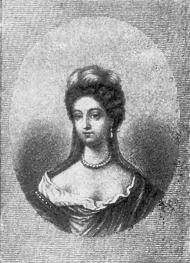
Maria Aurora Spiegel (geb. vor 1685; gest. nach 1725), genannt Fatima, nach eigener Angabe „geborne von Kahrimann“, gehörte zu den sogenannten Beutetürken, die während des Großen Türkenkrieges von Kriegern der christlichen Militärkoalition in den eroberten Gebieten des Osmanischen Reiches aufgegriffen und verschleppt wurden. Sie lebte zunächst als Pflegetochter bei der Gräfin Aurora von Königsmarck und gelangte mit dieser 1694 an den Hof des Kurfürsten Friedrich August I. von Sachsen (ab 1697 als August II. auch König von Polen-Litauen). Mindestens zwischen 1701 und 1706 unterhielt der Kurfürst-König mit ihr eine heimliche Affäre, während der sie zwei Kinder gebar, die August später als die seinigen anerkannte und in den Rang von Grafen erhob. Der Sohn Friedrich August Rutowski schlug eine Militärlaufbahn ein und avancierte bis zum Feldmarschall und Oberkommandierenden des sächsischen Heeres. Zu Beginn des 21. Jahrhunderts diente das außergewöhnliche Schicksal der Maria Aurora Spiegel als Vorlage für zwei historische Romane.
подробнее...Augustus II the Strong
Henrietta von Osterhausen

Henrietta von Osterhausen (died 6 November 1727, Dresden), was a German-Polish aristocrat. She is known as the mistress of Augustus II the Strong.
She was a lady-in-waiting to the daughter-in-law of August, Maria Josepha of Austria.
She replaced Erdmuta Zofia von Dieskau as royal mistress in 1720. When the affair was over, Maria Josepha suggested that she become a nun. She did live for the Ursuline convent in Prague, but stayed there only as a guest for a couple of months.
She married Albrecht Zygmunt von Zeigut-Stanisławski on 22 February 1724.
подробнее...Augustus II the Strong
Angélique Debargues

Angélique Debargues, Angélique Duparc (zm. po 1724) – francuska tancerka, primabalerina, metresa króla polskiego i elektora Saksonii Augusta II Mocnego.
подробнее...Augustus II the Strong
Zofia Eleonora Klengel
Zofia Eleonora Klengel (1674-1755), was a German aristocrat. She is known as the first known mistress of Augustus II the Strong in 1692–1695.
подробнее...Augustus II the Strong
Anna Aloysia Maximiliane von Lamberg

Anna Aloysia Maximiliane Louise von Lamberg (1676 – 28 June 1738), also known as Countess Esterle, was an Austrian countess who was successively the mistress of Augustus II the Strong, King of Poland, and Aleksander Benedykt Sobieski.
подробнее...